
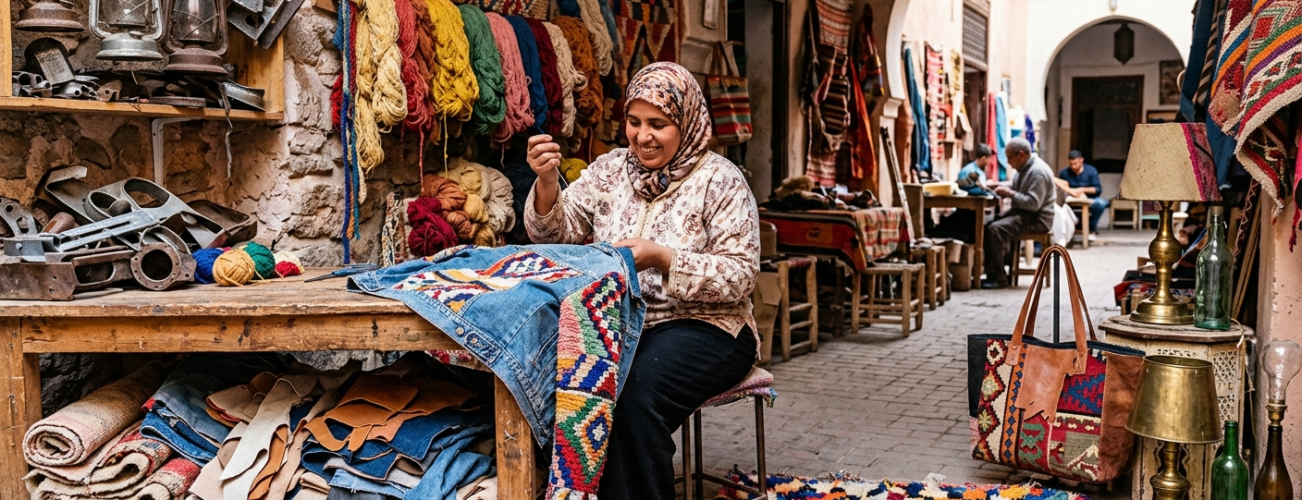
In the heart of Morocco’s bustling medinas, a silent revolution is taking place. It’s a movement where ancient craftsmanship meets 21st-century sustainability. Moroccan artisan upcycling is no longer just a local necessity; it has become a global benchmark for ethical luxury in both fashion and interior design.
By breathing new life into discarded materials, Moroccan creators are proving that « old » is the new « exclusive. »
What is Moroccan Artisan Upcycling?
While recycling breaks materials down, upcycling (or « surcyclage ») elevates them. In Morocco, this philosophy is deeply rooted in the concept of Baraka—the blessing found in valuing what we already possess.
Today’s designers are taking surplus textiles, vintage metals, and industrial waste, transforming them into high-end products that honor the planet and the person who made them.
Upcycled Fashion: From the Souk to the Runway
Moroccan fashion is shedding the « souvenir » label and embracing a bold, avant-garde aesthetic fueled by repurposed materials.
1. The Denim Revolution
Modern Moroccan labels are sourcing vintage denim jackets and trousers, deconstructing them, and reintegrating traditional Sfifa (braided silk trim) or hand-stitched embroidery. The result? A fusion of Western street style and North African soul.
2. The Boucherouite Aesthetic
The Boucherouite tradition—originally a method of weaving rugs from scrap fabric—has migrated into the wardrobe. We now see:
-
Textured clutches made from rag-weave fragments.
-
Statement coats composed of vintage kilim remnants.
-
Sustainable footwear using recycled rubber tires for soles and scrap leather for uppers.
Home Décor: Reimagining the Moroccan Riad
The « Boho-Chic » trend is evolving. Interior designers are moving away from mass-produced replicas in favor of authentic, upcycled Moroccan pieces that tell a story.
Transforming Waste into Wonder
| Original Material | Reimagined Product | Why It Works |
| Industrial Oil Drums | Sculptural Chairs & Mirrors | Industrial grit meets artisan finesse. |
| Scrap Cedarwood | Intricate Inlay Trays | Saves the endangered Atlas forests. |
| Vintage Brass Trays | Contemporary Pendant Lights | Hand-etched patterns create unique shadows. |
The « Slow Decor » Movement
Upcycled Moroccan décor encourages Slow Design. Instead of buying a mass-market rug, homeowners are opting for rugs woven from unraveled wool of older textiles. These pieces aren’t just floor coverings; they are carbon-sequestering pieces of art.
Why Moroccan Upcycling is the Future of Ethical Luxury
Choosing upcycled Moroccan goods isn’t just an aesthetic choice—it’s a political and environmental statement.
-
Zero Waste Heritage: It honors the « nothing lost, everything transformed » mindset of the Maghreb.
-
Supporting Local Economies: Every purchase empowers cooperatives, particularly women’s weaving circles in the Atlas Mountains.
-
Carbon Footprint Reduction: By utilizing existing materials, the energy required for raw material extraction and processing is eliminated.
« Upcycling in Morocco is the perfect bridge between the nostalgia of our roots and the urgency of our climatic future. »
Final Thoughts: A New Era of Craft
Moroccan artisan upcycling proves that we don’t need to choose between style and conscience. By reimagining waste as a resource, Morocco is leading the way toward a more colorful, circular, and compassionate world of design.

